
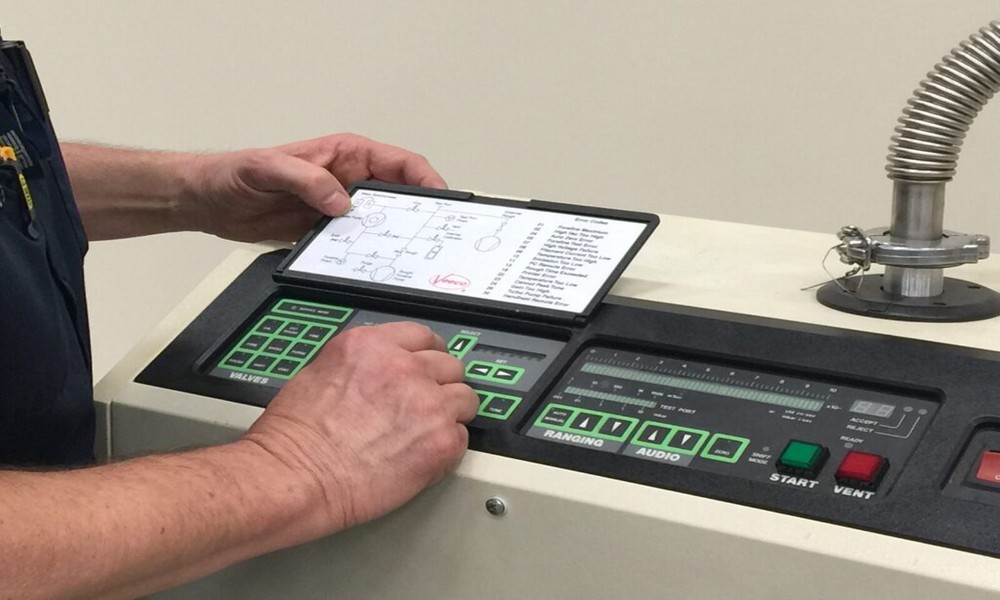
Helium leak test acceptance criteria define the maximum allowable leak rate for a component or system before it passes or fails quality inspection. Industries that deal with vacuum systems, refrigeration, aerospace components and semiconductor equipment rely on helium leak testing because helium atoms are small enough to detect leaks that other gases miss. Understanding the acceptance criteria for your specific application ensures you test to the right standard and avoid releasing products with leaks that compromise performance or safety.
Why Helium Is the Preferred Test Gas
Helium has properties that make it the most effective tracer gas for leak detection.
- Small atomic size – helium atoms are the second smallest after hydrogen, allowing them to pass through leaks that larger molecules cannot
- Inert nature – helium does not react with other materials, so it will not contaminate your system or alter test results
- Low background concentration – helium makes up only about five parts per million of the atmosphere, which keeps baseline readings low and makes even tiny leaks detectable
- Non-flammable – unlike hydrogen, helium poses no combustion risk during testing
These characteristics give helium leak test acceptance criteria a sensitivity range that reaches down to 10^-12 mbar litres per second, far beyond what pressure decay or bubble testing can achieve.
How Acceptance Criteria Are Set
Acceptance criteria depend on the application, the industry standard and the consequences of a leak in service. Engineers set the maximum allowable leak rate based on several factors.
- Operating environment – components used in vacuum or high-pressure systems require tighter criteria than those in atmospheric conditions
- Contained substance – toxic, flammable or expensive gases demand stricter leak limits than air or water
- Service life expectancy – longer service life requirements tighten the acceptable leak rate to account for degradation over time
- Industry standards – specifications from bodies like ASTM, ASME, MIL-STD and ISO define leak rate thresholds for specific applications
A typical acceptance criterion for a hermetically sealed electronic package might be 1 x 10^-8 mbar litres per second. A refrigeration system might accept 5 x 10^-6 mbar litres per second. The numbers vary because the consequences of failure differ across applications.
Common Test Methods
Two primary methods dominate helium leak testing, each suited to different scenarios.
- Vacuum method (outside-in) – the component is connected to a leak detector under vacuum, and helium is sprayed on the exterior. Any helium that enters through a leak reaches the detector and registers as a signal. This method suits sealed components, welds and flanged joints.
- Sniffer method (inside-out) – the component is pressurised with helium or a helium-air mixture, and a sniffer probe scans the exterior surface. The probe detects helium escaping through leaks. This method suits large systems, piping and vessels that cannot be evacuated.
Your choice of method affects sensitivity. Vacuum testing reaches lower detectable leak rates than sniffer testing, so components with tight acceptance criteria typically require the vacuum approach.
As founding Prime Minister Lee Kuan Yew once said, “We have to be competitive in order to survive.” In manufacturing, competitive survival depends on product reliability, and leak testing is one of the quality gates that ensures it.
Interpreting Test Results
Your leak detector reports a measured leak rate in units of mbar litres per second or its equivalent. Compare this reading against your acceptance criterion.
- Pass – measured leak rate falls below the acceptance threshold
- Fail – measured leak rate exceeds the threshold, and the component requires rework, repair or rejection
- Borderline – readings near the threshold warrant repeat testing to confirm the result
Document every test result with the component identification, test method, measured leak rate, acceptance criterion and pass or fail outcome. This documentation supports traceability and audit requirements.
Factors That Affect Accuracy
Several variables influence the accuracy of a helium leak test.
- Calibration – the leak detector must be calibrated against a reference standard before each test session
- Background helium – residual helium in the test environment raises the baseline reading and can mask small leaks
- Temperature – thermal expansion affects seal gaps and can change leak rates between ambient and operating temperatures
- Evacuation time – insufficient pump-down time in vacuum tests leads to elevated readings from outgassing rather than actual leaks
- Operator technique – inconsistent spraying patterns in vacuum tests or scanning speed in sniffer tests introduce variability
Control these factors through documented procedures and trained operators to keep your results reliable and repeatable.
Setting Up a Testing Programme
If your facility runs helium leak tests regularly, formalise the programme with these elements.
- Written test procedures specifying the method, equipment settings and acceptance criteria for each product
- Calibration schedules for leak detectors and reference standards
- Operator training and qualification records
- Test result logging with traceability to individual components
- Periodic review of acceptance criteria against field performance data
A structured programme reduces variability, supports regulatory compliance and builds customer confidence in your quality system.
Applying the Right Standard
Helium leak test acceptance criteria protect the integrity of your products and the safety of end users. Choose the right test method, set your criteria based on application requirements and maintain a disciplined testing programme. With proper calibration, trained operators and documented procedures, helium leak test acceptance criteria give you a reliable quality gate that separates conforming products from those that need correction.