
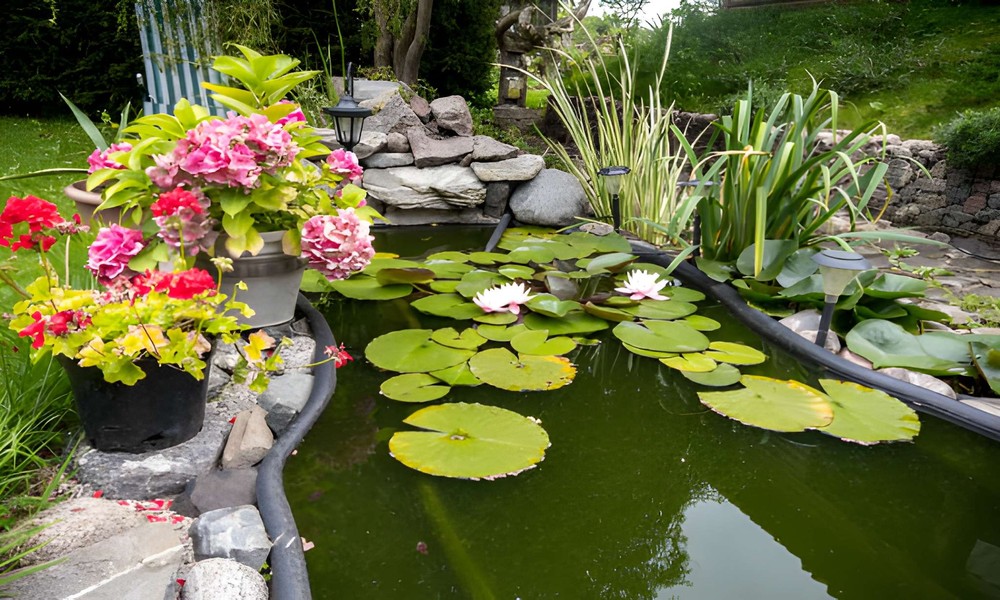
I used to trust my eyes. If the pond looked clean, I assumed everything inside it was fine. Fish visible, no smell, water sparkling in sunlight, that felt like proof enough. Then one day a fish behaved oddly, moving more slowly, staying away from the others. The water still looked perfect.
That is when I understood something important. Pond water can hide problems you simply cannot see.
- Ammonia has no colour
- pH changes slowly without obvious signs
- Oxygen levels drop without warning
Testing became less optional and more necessary. That Pond Guy suggested me to use a quality airpump. At first, I did not connect aeration with water testing. They felt like separate concerns. But oxygen supports the bacteria that break down waste. Those bacteria control ammonia and nitrite levels. And testing is what shows whether this balance is working. That Pond Guy presents pond equipment as parts of one system rather than isolated tools.
- Aeration helps biological filtration perform properly
- Biological filtration keeps ammonia and nitrite low
- Water testing reveals whether this system is stable
Everything is linked more closely than it seems.
Step 1 – Always begin with ammonia testing
Ammonia is often the first indicator of trouble. It comes from fish waste, leftover food, and organic decay. You cannot see it, but fish react to it quickly.
- Use a liquid test kit for accuracy
- Any reading above zero is concerning
- Elevated ammonia usually signals biofilter stress
The first time I saw a reading above zero, I was surprised because the pond looked fine.
Step 2 – Check nitrite and nitrate levels
After ammonia, nitrite appears, followed by nitrate. These readings show how efficiently waste is being processed by the biological filter.
- Nitrite should remain close to zero
- Nitrate is acceptable in small amounts
- High nitrate may indicate overstocking or infrequent water changes
These values help you understand the pond’s internal cycle.
Step 3 – Monitor pH regularly
pH does not change suddenly. It drifts over time due to rainwater, plant debris, and fish activity.
- Stable pH is more important than the exact value
- Sudden pH shifts stress fish significantly
- Regular checks help catch slow changes early
I once tested after weeks and realised how much it had moved unnoticed.
Step 4 – Observe signs of oxygen levels indirectly
Dissolved oxygen is not easy to measure without special tools, but fish behaviour gives clues.
- Fish staying near the surface
- Sluggish swimming patterns
- Poor filtration performance despite clear water
This is where aeration and testing start to connect clearly.
Step 5 – Make a testing routine rather than a reactive one
Most pond owners test only when problems appear. A better approach is consistency.
- Test weekly as part of maintenance
- Record results to spot trends
- Learn what “normal” looks like for your pond
Patterns over time are more useful than single readings.
Final thoughts while watching the colour change in a test tube
Testing pond water may seem dull, just drops in a tube and colour charts. But those colours reveal truths the eye cannot detect. Clear water can still hide issues. Regular testing brings them into view.Top of Form